CFTC Sues Wisconsin in Latest Federal-State Clash Over Prediction Markets
The CFTC has sued Wisconsin in its latest move against state efforts to regulate prediction markets, as the federal-state legal battle continues to expand.


The Commodity Futures Trading Commission (CFTC) has filed a federal lawsuit against Wisconsin, escalating its legal fight with states over the regulation of prediction markets. The complaint, filed in the U.S. District Court for the Eastern District of Wisconsin, seeks declaratory and injunctive relief to block the state’s efforts to apply its gambling laws to federally regulated event contracts.
Less than a week ago, the CFTC filed a similar lawsuit against New York. The agency has also sued Arizona, Illinois, and Connecticut for attempting to enforce state laws against prediction market platforms, such as Kalshi.
Washington has also taken action, suggesting the state could face a similar legal challenge from the CFTC.
CFTC Reasserts Longstanding Federal Jurisdiction Position
As in its previous lawsuits, the CFTC reasserts its position that Congress granted it “exclusive jurisdiction” over derivatives markets, including event contracts traded on prediction market platforms.
In the complaint, the agency states that the Commodity Exchange Act (CEA) “designates the CFTC as the federal agency with ‘exclusive jurisdiction’ over the regulation of commodity futures, options, and swaps traded on federally regulated exchanges.”
Framed as a Supremacy Clause dispute, the filing argues that Wisconsin’s enforcement efforts “intrude[] on the exclusive federal scheme Congress designed to oversee national swaps markets.”
The CFTC is seeking to “halt defendants’ efforts to apply and enforce preempted state laws to national markets that are governed by federal law.”
In a press release, CFTC Chair Mike Selig said that states “cannot circumvent the clear directive of Congress.” He added,
Our message to Wisconsin is the same as to New York, Arizona, and others: if you interfere with the operation of federal law in regulating financial markets, we will sue you.”
Wisconsin Targeted Five Prediction Market Platforms
The CFTC’s complaint follows enforcement actions by Wisconsin on April 23 targeting multiple prediction market operators. The state sued Kalshi, Polymarket, Crypto.com, Robinhood, and Coinbase.
Wisconsin alleges the platforms are facilitating illegal gambling under state law, claiming they are “violating Wis. Stat. § 945.03… and causing a public nuisance.” State officials further argued the companies were “facilitati[ng] … illegal sports betting” while disguising wagers as event contracts.
The CFTC rejects that characterization. It maintains that these contracts are federally regulated derivatives and “do not fall under the definition of ‘bets’” under Wisconsin law.
Multi-State Legal Campaign Continues
The Wisconsin filing fits into the CFTC’s expanding legal campaign to assert federal authority over prediction markets.
In addition to the lawsuits filed, the agency backed prediction market operators in Massachusetts through an amicus brief. It also secured a temporary restraining order in Arizona that blocked the state’s criminal case against Kalshi.
The complaints also argue that state-by-state enforcement makes it “much more difficult for the CFTC to regulate, advise, and enforce its authority.”
The filing also highlights a potential procedural wrinkle in the CFTC’s litigation approach. Gambling attorney Daniel Wallach noted that the Commission brought its Wisconsin case in the Eastern District, even though the state’s related enforcement actions— which operators have moved to federal court—are pending in the Western District, where the state capital is located.
He has previously pointed to a similar dynamic in New York, potentially setting up venue disputes as the cases progress.
Federal vs State Battle Continues
The Wisconsin filing adds to the growing legal battle over prediction markets and a central question: whether event contracts should be treated as federally regulated financial instruments or state-regulated gambling products.
Two key legal questions underpin the dispute:
- Whether event contracts qualify as “swaps” under the CEA
- Whether the CEA preempts state laws
Courts have been split on the issue. In state-level disputes, such as in Massachusetts and Nevada, judges have mostly sided with state regulators. At the federal level, courts in states such as Nevada, Ohio, and Maryland have sided with the states, while those in New Jersey and Tennessee have sided with prediction markets.
Industry observers increasingly expect the U.S. Supreme Court to eventually decide the issue.
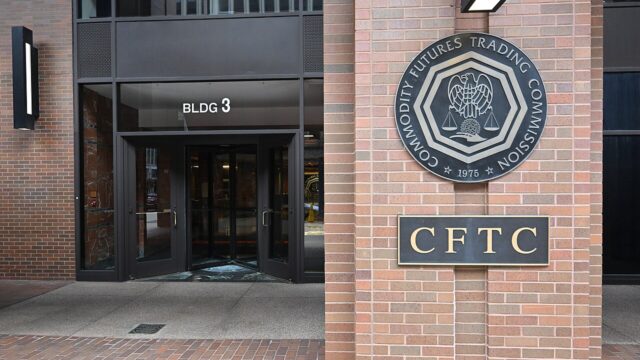
Image credit: G. Edward Johnson via Wikimedia Commons (license)


Gambling Insider delivers the latest industry news, in-depth features, and operator reviews that you can trust. Our team combines rigorous editorial standards with decades of specialized expertise to ensure accuracy and fairness. We are committed to delivering clear, impartial, and dependable coverage across the global gambling sector.